
String Polyfills and Common Interview Methods in JavaScript
Introduction
Strings are one of the most frequently used data types in JavaScript. They are used to handle user input, display content, manipulate data, and perform transformations. JavaScript provides a wide range of built-in string methods, but understanding how these methods work internally is crucial for mastering the language.
In technical interviews, developers are often asked to implement these methods manually. This is where polyfills become important. This document explores string methods, the need for polyfills, implementation of common utilities, and frequently asked interview problems.
What String Methods Are
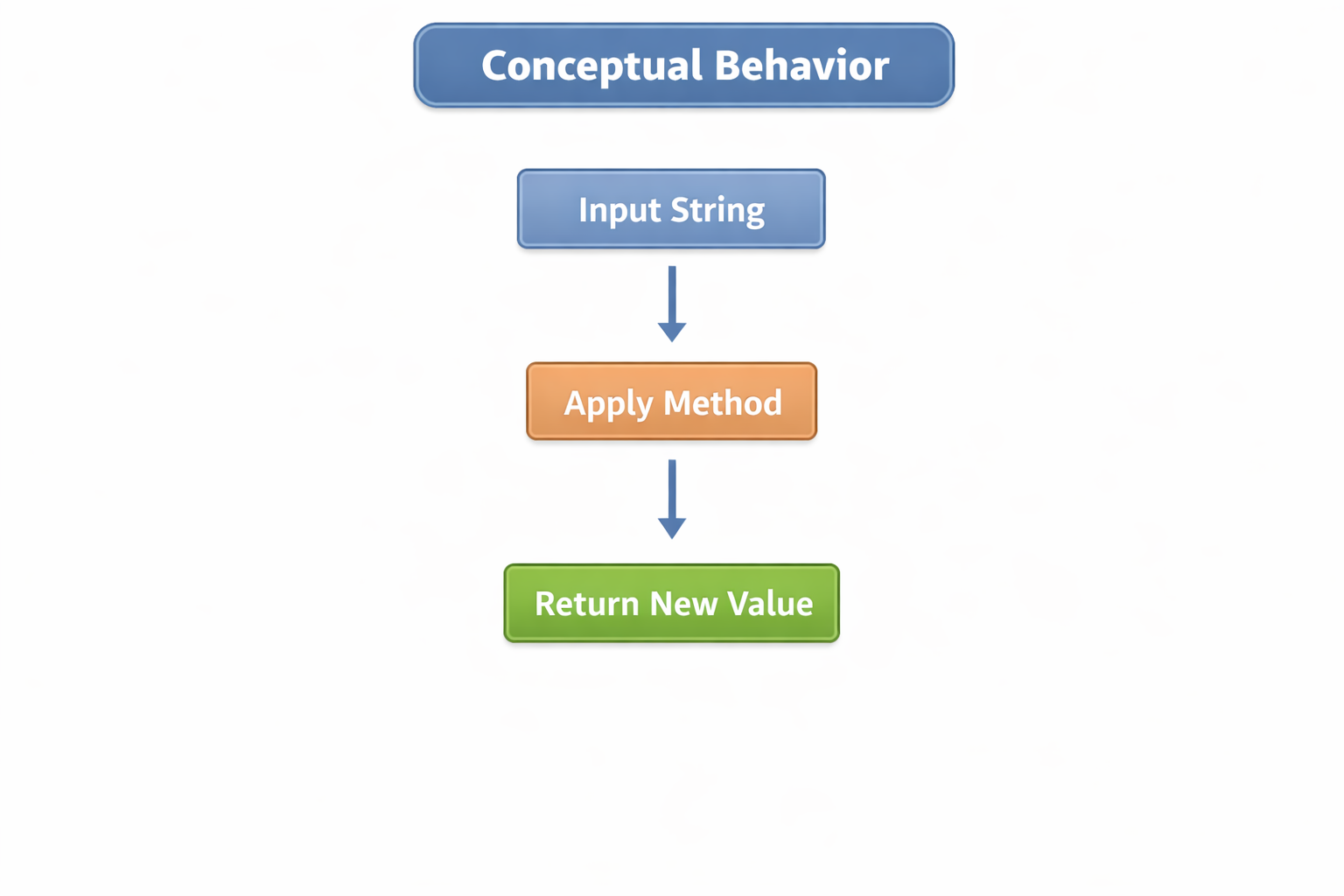
String methods are built-in functions that operate on string values. Since strings in JavaScript are immutable, these methods do not modify the original string. Instead, they return new strings or values.
Categories of String Methods
Inspection Methods
These methods analyze the string and return information.
Examples:
lengthcharAt()indexOf()includes()startsWith()endsWith()
Extraction Methods
These methods extract parts of a string.
Examples:
slice()substring()
Transformation Methods
These methods return modified versions of strings.
Examples:
toUpperCase()toLowerCase()trim()replace()split()
Search Methods
These methods locate patterns within strings.
Examples:
search()match()
Conceptual Behavior
Why Developers Write Polyfills
A polyfill is a custom implementation of a built-in method.
Reasons for Writing Polyfills
Understanding Internal Logic
Recreating methods helps understand how they work step by step.
Handling Edge Cases
Polyfills require handling invalid inputs, boundaries, and type conversions.
Interview Preparation
Interviewers often test:
Logical thinking
Knowledge of JavaScript fundamentals
Ability to handle edge cases
Consistency Across Environments
In older environments, some methods may not exist.
Implementing Simple String Utilities
Custom charAt Implementation
String.prototype.customCharAt = function(index) {
  let position = Math.floor(index) || 0;

  if (position < 0 || position >= this.length) {
    return "";
  }

  return this[position];
};

console.log("world".customCharAt(2)); // "r"
Custom includes Implementation
String.prototype.customIncludes = function(search, position) {
  let start = position || 0;

  for (let i = start; i <= this.length - search.length; i++) {
    let match = true;

    for (let j = 0; j < search.length; j++) {
      if (this[i + j] !== search[j]) {
        match = false;
        break;
      }
    }

    if (match) return true;
  }

  return false;
};

console.log("javascript".customIncludes("script")); // true
Custom startsWith Implementation
String.prototype.customStartsWith = function(search, position) {
  let start = position || 0;

  for (let i = 0; i < search.length; i++) {
    if (this[start + i] !== search[i]) {
      return false;
    }
  }

  return true;
};

console.log("developer".customStartsWith("dev")); // true
Custom trim Implementation
String.prototype.customTrim = function() {
  let start = 0;
  let end = this.length - 1;

  while (this[start] === " ") start++;
  while (this[end] === " ") end--;

  return this.slice(start, end + 1);
};

console.log("  code  ".customTrim()); // "code"
Custom repeat Implementation
String.prototype.customRepeat = function(count) {
  let result = "";

  for (let i = 0; i < count; i++) {
    result += this;
  }

  return result;
};

console.log("ab".customRepeat(3)); // "ababab"
Custom padStart Implementation
String.prototype.customPadStart = function(targetLength, padString) {
  let padding = "";

  while (padding.length < targetLength - this.length) {
    padding += padString;
  }

  return padding.slice(0, targetLength - this.length) + this;
};

console.log("7".customPadStart(3, "0")); // "007"
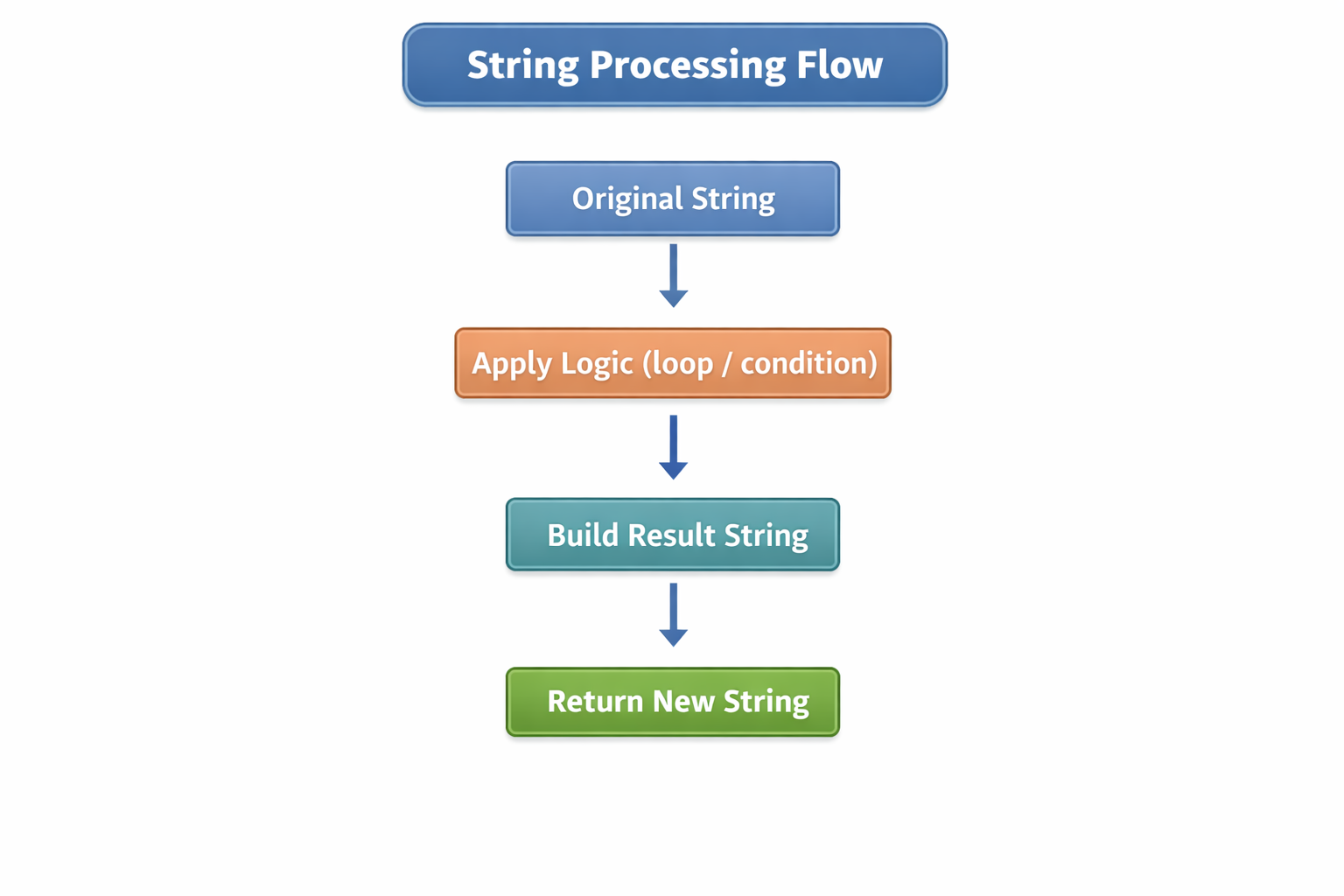
String Processing Flow
Common Interview String Problems
Reverse a String
Using Loop
function reverse(str) {
  let result = "";

  for (let i = str.length - 1; i >= 0; i--) {
    result += str[i];
  }

  return result;
}

console.log(reverse("code")); // "edoc"
Check for Palindrome
function checkPalindrome(str) {
  let left = 0;
  let right = str.length - 1;

  while (left < right) {
    if (str[left] !== str[right]) {
      return false;
    }
    left++;
    right--;
  }

  return true;
}

console.log(checkPalindrome("madam")); // true
First Non-Repeating Character
function firstUnique(str) {
  let count = {};

  for (let char of str) {
    count[char] = (count[char] || 0) + 1;
  }

  for (let char of str) {
    if (count[char] === 1) {
      return char;
    }
  }

  return null;
}

console.log(firstUnique("swiss")); // "w"
Longest Substring Without Repeating Characters
function longestUniqueSubstring(str) {
  let set = new Set();
  let left = 0;
  let max = 0;

  for (let right = 0; right < str.length; right++) {
    while (set.has(str[right])) {
      set.delete(str[left]);
      left++;
    }

    set.add(str[right]);
    max = Math.max(max, right - left + 1);
  }

  return max;
}

console.log(longestUniqueSubstring("abcabcbb")); // 3
String Compression
function compress(str) {
  let result = "";
  let count = 1;

  for (let i = 0; i < str.length; i++) {
    if (str[i] === str[i + 1]) {
      count++;
    } else {
      result += str[i] + count;
      count = 1;
    }
  }

  return result.length < str.length ? result : str;
}

console.log(compress("aaabbc")); // "a3b2c1"
Anagram Check
function checkAnagram(a, b) {
  if (a.length !== b.length) return false;

  let map = {};

  for (let char of a) {
    map[char] = (map[char] || 0) + 1;
  }

  for (let char of b) {
    if (!map[char]) return false;
    map[char]--;
  }

  return true;
}

console.log(checkAnagram("listen", "silent")); // true
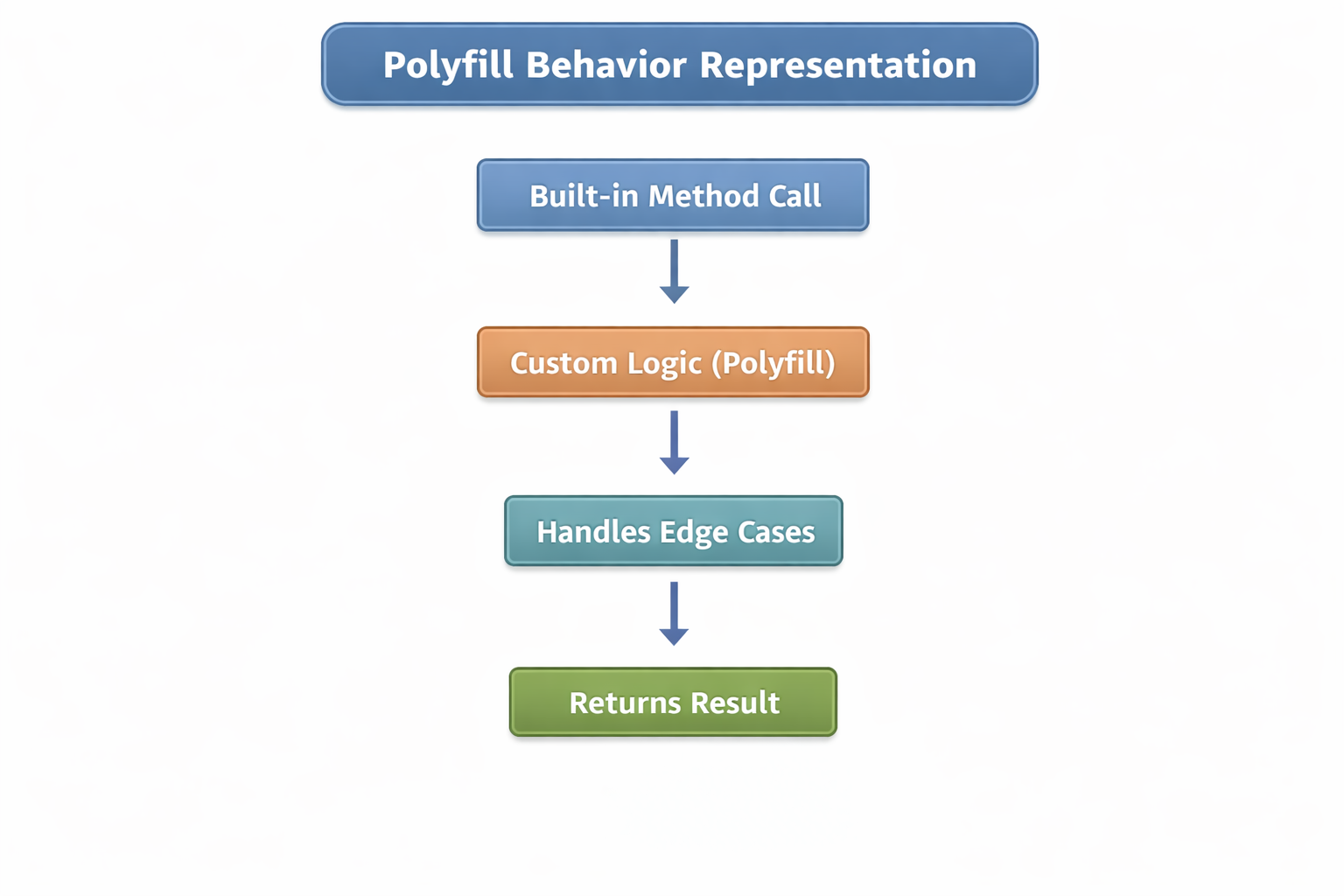
Polyfill Behavior Representation
Importance of Understanding Built-in Behavior
Deeper Understanding
Writing polyfills forces developers to understand internal working.
Improved Problem Solving
Breaking down methods improves logical thinking.
Strong Fundamentals
Covers:
Prototypes
Loops
Type handling
Edge cases
Interview Readiness
Most technical interviews include:
String manipulation problems
Custom implementation tasks
Performance Awareness
Helps in writing optimized and efficient code.
Conclusion
String polyfills and related interview problems are essential for mastering JavaScript fundamentals. They bridge the gap between using built-in methods and understanding their internal behavior.
By practicing these implementations and problems, developers gain stronger problem-solving skills, deeper language understanding, and better preparation for real-world coding challenges and technical interviews.